As an AI factory operator, you’re facing the challenge of deploying complex infrastructure faster, managing extreme compute densities, and maximizing AI output per watt.
At STULZ, we provide scalable, high-density cooling solutions and expert support from planning to operation, helping you deploy faster, manage thermal loads reliably, and build an efficient cooling infrastructure that grows with your AI capacity.

Key challenges in AI Factory Cooling
- Speed to market
- Maximizing tokens per watt
- High rack densities & dynamic load peaks
- Maintaining uptime
- Future-ready scalability
- Managing system complexity
Cooling designed around your AI infrastructure
STULZ addresses the key challenges of AI Factory Cooling with solutions designed around your infrastructure, from rapid deployment and energy efficiency to high-density cooling, continuous operation and future growth.
Faster time to market
- Modular cooling concepts for faster planning and deployment
- Repeatable cooling architectures reduce installation and commissioning effort
- Local availability in 140+ countries with 11 production sites worldwide

More compute per watt
- Energy-efficient cooling maximizes tokens per watt
- Free Cooling expertise minimizes energy-intensive mechanical cooling
- Intelligent cooling control adapts cooling output to actual demand

Cooling dynamic high-density loads
- STULZ Liquid Cooling solutions remove high heat loads directly and efficiently
- STULZ Air Cooling systems manage remaining heat loads across the data hall
- Dynamic cooling control made for fast changing thermal loads

Built for continuous operation
- Redundant cooling concepts help maintain cooling availability during failures
- Leak detection and continuous monitoring for maximum uptime
- Lifecycle support without operational downtime

Designed to scale
- Scalable cooling concepts accommodate increasing rack densities
- Modular system design simplifies future expansion
- Suitable solutions for different sites

One integrated cooling approach
- Air and Liquid Cooling from one source supports seamless operation
- Consistent control across different product sizes and applications
- Expert consulting from planning through operation

One cooling partner for the entire AI Factory
AI factories require more than individual cooling products. STULZ combines Air and Liquid Cooling, controls, monitoring and service to create an integrated cooling architecture designed for high-density AI infrastructure.


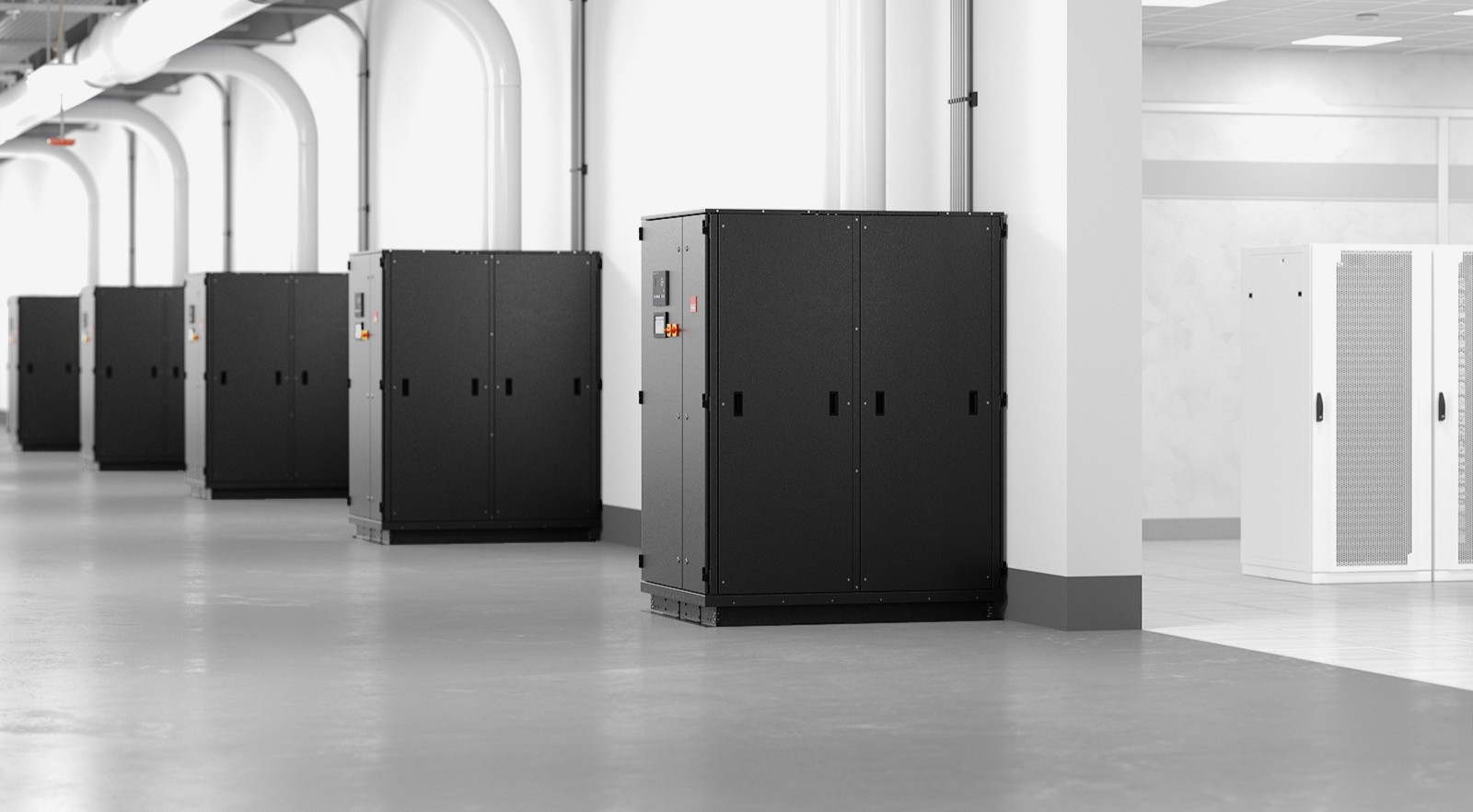
Built for extreme AI loads
The STULZ CDU SCS15102Wu enables reliable operation at high power densities in AI factories.
› View our CDU listing on a leading AI infrastructure marketplace
AI Factory insights
Explore practical guidance on planning, sizing and operating cooling infrastructure for high-density AI workloads.
End-to-End Cooling: The key to resilient AI Data Centers
Sizing cooling for AI workloads correctly
Liquid Cooling and AI: Wait, watch or act?
Frequently asked questions
What cooling is required for an AI Factory?
AI Factory cooling typically requires a combination of Liquid Cooling, Air Cooling and facility-side cooling. The right architecture depends on the AI workloads, rack densities, IT equipment as well as site and local conditions.
Why is Liquid Cooling essential for high-density AI infrastructure?
High-density AI infrastructure generates increasingly concentrated heat loads. Direct Chip Liquid Cooling (DCLC) captures heat directly where it is generated, enabling a rapid response to peak loads while supporting much higher rack densities.
› Explore how increasing AI power densities are changing cooling
Do AI Factories still need Air Cooling?
Yes. Liquid Cooling removes heat from high-density components, while air cooling continues to manage residual heat and equipment that remains air cooled. The balance depends on the server architecture, facility requirements and local conditions.
How should cooling be sized for different AI workloads?
Cooling requirements depend not only on maximum IT load, but also on workload behavior. Inference, industrial AI, and AI training create different thermal profiles, including rapid load changes that cooling systems must respond to.
How far ahead should I plan cooling capacity for my AI Factory?
Cooling infrastructure should be designed with future AI hardware and increasing capacity requirements in mind, without oversizing the system from day one. A modular, scalable approach allows cooling capacity to grow with evolving chip generations, power densities, and deployment needs.
Can an existing data center be upgraded for AI workloads?
Yes. Existing facilities can potentially be adapted for higher-density AI infrastructure. Available power, cooling capacity, liquid distribution, air-cooling requirements, and heat rejection need to be evaluated against the planned AI capacity.